
College of Veterinary Medicine
As demand for veterinary professionals continues to rise, Roseman's proposed College of Veterinary Medicine represents a strategic and timely investment in Nevada's animal health, public health, and rural economic development.
Building on more than 25 years of success, 14 programs, Colleges of Nursing, Pharmacy, Medicine, Dental Medicine, and Graduate Studies, Roseman University of Health Sciences has formally initiated planning for Nevada’s first College of Veterinary Medicine (COVM), following submission of a Letter of Intent to the American Veterinary Medical Association (AVMA) Council on Education. With the Board of Trustees’ approval, the University is moving forward with preliminary planning for the proposed four-year Doctor of Veterinary Medicine (DVM) program, designed to address the critical shortage of veterinarians across Nevada and the surrounding region.
Aligning with the One Health Model — and in a critical region of need — we will focus on the inextricable link between the health of our citizens, our animals, our communities, and our environment. With the stunning backdrop of rural Nevada and the vibrant cultural and entertainment hub of Las Vegas as our training ground, our students will enjoy access to exciting recreational opportunities and a stimulating, fast-growing community rich in diversity, beauty, and experiences.
UPDATE: The American Veterinary Medical Association (AVMA) Council on Education (COE) has scheduled a consultative site visit to the university’s Henderson campus January 24-28, 2027, an important step in the comprehensive accreditation process for the proposed program. The consultative site visit allows the AVMA COE to review the university’s progress and provide guidance as Roseman continues development of the proposed college.
Meet Our Founding Dean
 Katherine Fogelberg, DVM, PhD
Founding Dean
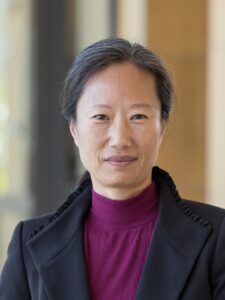 Katherine Fogelberg, DVM, PhD
Katherine Fogelberg earned a PhD in Science Education from Texas Christian University, an MA in Educational Leadership from St. Mary’s University (San Antonio, TX), and a DVM from Texas A&M University. An Army veteran, she has well over a decade of small animal general practice/emergency experience with a few years of zoo and wildlife medicine experience as well. Dr. Fogelberg has worked for 15 years in higher education as a professor and administrator; has published numerous scholarly articles and reviews for scholarly journals across education, veterinary medicine, and public health; is the editor and a contributing author for a recently published veterinary education textbook; provides educational consulting services; and has delivered several keynote and CE sessions over the past decade. Dr. Fogelberg is also a co-founder and the CEO of a non-profit that has a school in Kisii, Kenya, which currently educates over 300 children. As a founding member of the Academy of Veterinary Educators, she served as its first President and was recognized as one of 32 Distinguished Educators, a cohort established to help create, implement, and oversee a rigorous certification process intended to formally recognize expert and accomplished veterinary educators across the profession and around the world.
College of Veterinary Medicine FAQs
All veterinary schools in the United States must go through the American Veterinary Medical Association Council on Education (AVMA COE) to gain accreditation, which is a quality assurance process that assures students they are attending a program that has met rigorous standards. The AVMA COE dictates the process for veterinary programs, and it generally takes 3 years or more to obtain permission to accept students. This is partly due to the number of programs the AVMA COE must manage and partly due to the circumstances of the individual programs applying for accreditation. Additionally, for new programs, the AVMA COE prioritizes applications based on time of application. This means that there is essentially a “waiting line” and wherever you land in that line is where you remain as you move through the process.
The first step in the process was to hire a Founding Dean who is a veterinarian; this was completed in May 2025. The second step was to submit a letter of intent, which was completed in June 2025. We will be contacted in early 2026 to schedule the consultative site visit, the third step in the process in 2027.
Once the consultative site visit is completed, it is usually a year or more for the AVMA COE to schedule the comprehensive site visit, which is the fourth step in the process and the one that determines whether we will be granted a Letter of Reasonable Assurance (LORA). Once we are granted the LORA we can begin accepting students. Because of this process, we do not anticipate accepting our first class until at least 2028, though it may be 2029 or later depending on the AVMA COE and how our two site visits proceed.
For more information about the accreditation process and its purpose, visit the AVMA COE at https://www.avma.org/education/center-for-veterinary-accreditation/accreditation-policies-and-procedures-avma-council-education-coe
A veterinary medical program is called either a School or College of Veterinary Medicine (Roseman is pursuing a College of Veterinary Medicine, which we are designating as the COVM). Veterinary programs produce veterinarians, who are Doctors of Veterinary Medicine (DVMs). As with all professional medical degrees, it requires rigorous training, licensing examinations, and maintenance of professional licenses in the jurisdiction (state) within which a veterinarian intends to practice.
What are the prerequisites I need to be eligible to apply for the DVM program?
Roseman has not yet set its prerequisites; continue checking back for updates. However, you can get a good sense of what other schools require by visiting the AAVMC’s applicant guide at https://www.aavmc.org/wp-content/uploads/2024/03/VMCAS_2025_ApplicantGuide.pdf
You can also compare the prerequisites for existing veterinary programs at https://admin.applytovetschool.org/wp-content/uploads/2025/05/Prereq-chart-for-VMCAS-2026.pdf
In general, if you have the following, you should meet many of the veterinary programs’ prerequisites:
At least one semester of:
- Biology with lab intended for science majors
- Microbioloyg with lab
- Physics (calculus or non-calculus based acceptable)
- Statistics
- Biochemistry with lab (at least one semester of organic chemistry as a prerequisite)
- English composition
- Speech or communication
If your undergraduate degree program does not require these courses, you will need to add them in to ensure you meet application requirements.
Most successful veterinary school applicants have completed all the prerequisite courses, at least a Bachelor’s degree, and several extra/co-curricular activities, including paid or volunteer work within the veterinary field, prior to beginning veterinary school. A very small number of exceptional students apply and are accepted after completing only 2 or 3 years of undergraduate work (including all prerequisite courses).
In general, there is no specific degree that will make your more competitive. The admissions process varies from program to program, but most consider many factors, including your overall undergraduate GPA, your GPA in your upper (300 or above) division science courses, how many credit hours you completed each semester, extra/co-curricular activities, life experiences, animal-related experiences, etc. Whether you complete your prerequisite courses as part of your undergraduate degree (e.g., biology, chemistry) or in addition to your undergraduate degree (e.g., philosophy, education, sociology) does not matter. Roseman will use a mission-oriented admissions process and will follow evidence-informed admissions practices when it begins to accept students.
The application process is competitive: for the application cycle 2024-2025, there were over 12,000 applications for about 5,000 first-year seats.
Most veterinary programs are 4 years. Roseman will be a 4-year program, with 3 years of classroom, laboratory, and experiential learning followed by a full year of clinical experiences (“clerkships”) intended to prepare the senior veterinary student for graduation and work in a veterinary medical career.
While Roseman is not yet accepting students, once we begin, we will go through the centralized application service known as VMCAS (the veterinary medical college application service). You can explore their website at https://vmcas.cas.myliaison.com/applicant-ux/#/login
Committed to Community
As we embark on this journey, we recognize that the success of this endeavor depends on strong partnerships with community stakeholders and the veterinary professionals who already serve Nevada’s communities. We are committed to working with veterinarians and veterinary professionals throughout the state—across urban centers and rural regions alike—to help shape and train the next generation of practice-ready, service-driven veterinarians.
Your insights and involvement will be vital as we build a program that reflects the realities of veterinary practice in Nevada and the broader region. Whether through serving as clinical training partners, mentoring students, or advising on workforce needs, we hope you will join us in this effort.
Contact Us
Veterinary Education and Workforce Needs in Nevada
Roseman University’s proposed College of Veterinary Medicine aims to support and grow Nevada’s veterinary infrastructure by training a new generation of highly skilled, practice-ready veterinarians and establishing clinical training partnerships with veterinary practices and organizations statewide. Through these efforts, Roseman aspires to strengthen animal health systems in underserved and rural areas and support economic development through workforce expansion and professional collaboration.
First in Nevada
Roseman’s proposed College of Veterinary Medicine will be the first and only veterinary school based in Nevada, positioning the University as a leader in filling a statewide education and service gap.
Nevada's Veterinarian Shortage
Nevada faces one of the most severe veterinarian shortages in the U.S. with fewer than 800 licensed veterinarians. The state ranks near the bottom nationally in veterinarians per capita. The shortage is especially pronounced in rural areas, where access to veterinary services is limited or non-existent. Without sufficient veterinary care, animal welfare, food safety, and public health are all at risk.
LEARNING ON-SITE AND IN THE COMMUNITIES WE SERVE
The College’s four-year DVM degree program will use a hybrid, distributive model that combines clinical training at affiliated practices with several College-run clinical opportunities. This model integrates hands-on, real-world primary care in private, corporate, and university practices, allowing students to gain experience across different environments that align with their interests and build confidence. Students will complete classroom and laboratory learning at Roseman’s Henderson campus, where they will gain the knowledge and acquire the skills needed to become a veterinarian. Application of their learning will occur in our proposed state-of-the-art Small Animal Primary Care Clinic and additional Roseman-based production animal and equine mobile units. Remaining clerkships will occur at off-campus partner sites throughout Nevada and surrounding states, increasing student exposure to diverse veterinary career opportunities and ensuring support for rural communities and areas considered “veterinary deserts.”
GENERAL PRACTICE CLINIC
A full-service small-animal primary care clinic on the Henderson campus will care for our student, Roseman, and community pet owners as both a teaching clinic and a required clerkship for all Roseman fourth-year (senior) COVM students. At over 6,300 square feet, it is projected to have 2 surgical suites, 2 dental suites, 10 exam rooms, a compounding pharmacy space, and ample lab space. It will also include digital dental and general radiography, as well as ultrasound. While we will focus on producing strong General Practitioners, we specifically look to graduate veterinarians who are especially strong in surgery and dentistry, two areas of high need.
News and Updates
Roseman University Advances Plans for College of Veterinary Medicine with Scheduled Accreditation Site Visit
The American Veterinary Medical Association (AVMA) Council on Education (COE) has scheduled a consultative site visit to Roseman University’s Henderson campus January 24-28, 2027, an important step in the comprehensive accreditation process for the proposed program.
Roseman University Appoints Dr. Christina V. Tran as Executive Associate Dean for Proposed College of Veterinary Medicine
Roseman University appoints Christina V. Tran, DVM, as executive associate dean of the university’s proposed College of Veterinary Medicine
Roseman University to Begin Planning for College of Veterinary Medicine in Nevada, Names Founding Dean
Roseman University announced that it has submitted a letter of intent to the American Veterinary Medical Association (AVMA) Council on Education, formally initiating the planning process for a proposed College…