
Beyond Borders: Providing Anesthesia in an Area of Need
Roseman DNP Nurse Anesthesia students share their experience providing safe, compassionate anesthesia care in the Dominican Republic. This global health mission strengthened their clinical skills, adaptability, and commitment to patient safety while advancing health equity and expanding access to surgical and anesthesia care beyond borders.
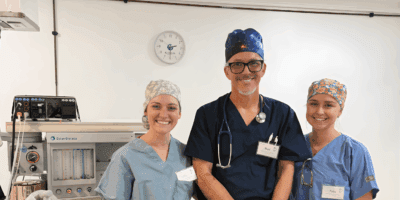
What struck us most was how familiar the work felt, even in a place so far from home. The medications still required careful preparation, and the patients still looked to us with the same mixture of fear and trust that we see in every operating room. The difference was the setting. We provided anesthesia in an underserved community at Hospital Buen Samaritano in La Romana, where access to surgical care is often limited by cost and geography. As students in Roseman’s Doctor of Nursing Practice in Nurse Anesthesia (DNPNA) program, we quickly realized that our focus was not on what we lacked in resources, but on what we could provide. Each case was more than a procedure; it was an opportunity for women to finally receive care they had waited years to access.
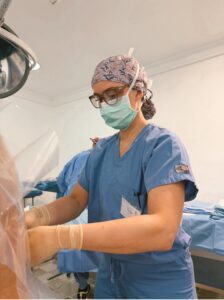 Our team traveled to the Dominican Republic to care for women in need of gynecologic procedures, including hysterectomies and tubal ligations. Access to surgical care in this region is limited, especially for patients living in small rural communities known as bateyes. A batey (bah-TAY) is a small, historically agricultural community in the Dominican Republic, originally established to house sugarcane workers and now often characterized by limited access to healthcare, infrastructure, and economic resources. Women from the bateyes typically receive basic primary care from visiting mission groups every few months, yet access to surgical treatment can take years. Many of the women we cared for had learned to accept chronic bleeding, pain, and cramping as part of their daily lives simply because treatment was out of reach. Watching these women receive long-awaited surgery was deeply meaningful. Hysterectomies offered relief from years of suffering, while tubal ligations gave women greater control over their health and futures. Behind each of these life-changing procedures was the essential role of safe, effective anesthesia, allowing surgery to be performed with dignity, comfort, and safety.
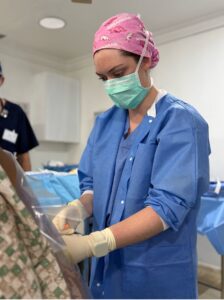 Each day began with equipment checks, medication preparation, and careful planning, but the environment required us to remain flexible at every step. We delivered a range of anesthetic techniques, including spinal anesthesia, intravenous sedation, and transversus abdominis plane (TAP) blocks for postoperative pain control, all under the supervision of our Roseman faculty, Dr. Brad Stelflug, CRNA. Limited resources required creativity and vigilance. Donated blood is scarce. To receive blood, a patient must donate a unit pre-procedure or have a family member donate a unit. Both scenarios require a cost that most women in the bateyes cannot afford. Also, lifesaving medications were in short supply or nonexistent in this hospital. Despite the constraints, our priorities never changed: anticipating physiologic shifts, maintaining oxygenation and perfusion, and ensuring each patient emerged safely and comfortably. Working alongside the surgical team—and communicating through interpreters and reassuring gestures—we saw how access to safe anesthesia made surgery and healing possible for women who had waited far too long for care.
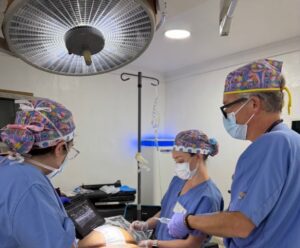 This experience challenged us to grow as future anesthesia providers, pushing us to think creatively and practice safely in an unfamiliar environment. No matter the country or setting, patient vulnerability during surgery is universal, and as future anesthesia providers, we carry the responsibility of protecting our patients during some of their most fragile moments. Whether practicing in the United States, where resources are abundant, or in the Dominican Republic, where even electricity was not always guaranteed, patient safety must remain the priority. Providing that safety requires flexibility and constant problem-solving. When the electricity failed, and monitors fell silent, we returned to the fundamentals—stethoscopes to chests, fingers on radial pulses—ensuring our patients remained stable. When a patient developed supraventricular tachycardia and no beta-blockers were available, we adapted, using alternative agents such as dexmedetomidine to regain rate control. When another patient presented with a grade IV murmur, we used the ultrasound we had brought for our nerve blocks to evaluate cardiac function and confirm that spinal anesthesia could be performed safely.
This mission stretched us in ways we never anticipated, strengthening not only our clinical judgment but also our confidence and teamwork. The lessons we learned, as well as the resilience and gratitude of the women we cared for, will remain with us long after this trip, shaping how we practice in clinical training and guiding the care we provide in operating rooms throughout our careers.
This experience strengthened our purpose as future CRNAs and deepened our understanding that the most meaningful care often occurs where the need is greatest. We are profoundly thankful to Roseman’s DNPNA program and the College of Nursing for the opportunity to serve, learn, and lead beyond our borders.
Are you ready to make an impact in your local community, or even globally, through advanced anesthesia practice? Through Roseman University’s DNPNA program, you’ll gain the clinical expertise, leadership skills, and real-world experience needed to provide safe, compassionate anesthesia care—whether in a state-of-the-art U.S. operating room or an underserved community abroad.
If you are passionate about becoming a Certified Registered Nurse Anesthetist (CRNA), advancing health equity, and delivering high-quality anesthesia care in areas of need, your journey starts at Roseman University College of Nursing.
Learn more about Roseman’s DNPNA program and apply today to begin your path toward becoming a CRNA who leads with skill, confidence, and purpose.