
Medical Simulation Center
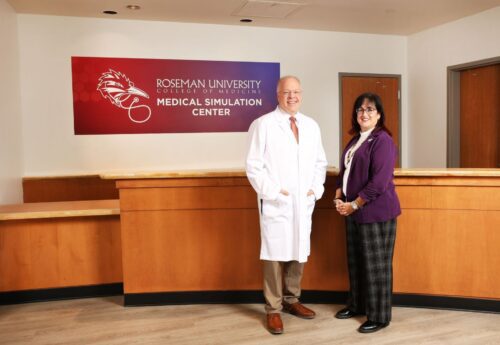
About the Simulation Center
The Simulation Center is a 12,000-square-foot facility at Roseman University College of Medicine. It features patient rooms for standardized patient encounters, clinical skills rooms, and high-fidelity immersive simulation rooms, providing medical students with practical learning experiences that support their growth throughout all four years of education.
Mission Statement
The Roseman University College of Medicine’s (RUCOM) Medical Simulation Center’s (MSC) core mission is to prepare all its learners for best practices in their clinical settings and to use outcome-based healthcare education through the development, application, and assessment of learner-centered educational methods based in Roseman University’s Six Point Mastery Learning Model (https://www.roseman.edu/about/roseman-university-six-point-mastery-learning-model/).
Vision Statement
The Medical Simulation Center aspires to become a regional leader in applying simulation to education, training, and research to enhance patient safety and quality of care, foster interprofessional communication and teamwork, and serve as a source of lifelong learning for its users at all levels and in all disciplines of the healthcare community. By providing high-quality and high-fidelity clinical simulation activities, the MSC will design and deliver healthcare simulation in an inclusive and collaborative environment for innovative learning, healthcare, and research.
Values Statement
The MSC will be a leading simulation program that embodies the values of interprofessionalism, innovation, patient safety, and lifelong learning.
-
Interprofessionalism
We value interprofessionalism and seek to foster it wherever possible. We believe the best way to train students and professionals is to create an authentic environment where a variety of health professions are present. We will facilitate efforts to train professionals ready to work in high-functioning teams that deliver evidence-based, best practices in healthcare.
-
Innovation
We value innovation and seek to be creative in our use of simulation throughout Roseman University and the region. In order to promote ingenuity and creativity in healthcare education, we value responsible risk-taking that leads to the sustainable growth of simulation within the institution that is learner and partner focused, putting our users’ needs first. Whether developing a breakthrough approach or an incremental improvement in how we do things, we encourage and embrace curiosity, innovation and discovery.
-
Safety
We value a culture of safety for all who come in contact with any healthcare environment. We believe in promoting safety practices and quality assurance by ensuring healthcare professionals gain competence in procedures and processes within a high fidelity but low-risk learning environment.
-
Cultural Awareness/Social Determinants of Health
We seek to educate and encourage all of our learners to recognize and understand the cultural differences of all their patients. This education will foster current and future health care providers’ understanding of the social determinants of health which shape their patients’ health beliefs, behaviors and influence their access to care – all of which will result in providing excellent and compassionate health care.
-
Lifelong Learning
We value lifelong learning and instilling humility, excellence, and respect among all who teach, work, and train at the MSC. We will encourage health professions students and professionals to embrace continuous personal and professional growth.
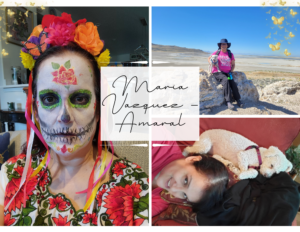
Maria Vazquez-Amaral, JD, MEd
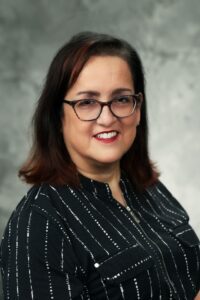
Dean Vazquez-Amaral joined Roseman University College of Medicine in July 2023 as Assistant Dean for Medical Simulation. A former New York City lawyer and litigator, a career she chose after failing out of NASA’s Astronaut Training Program, she brings over a decade of leadership in developing and directing medical simulation programs at the University of Virginia School of Medicine and Noorda College of Osteopathic Medicine. Her expertise includes program planning, curriculum development, and outreach for UME, GME, CME, and community initiatives, along with extensive public speaking and conference presentation experience.
Outside of work, Maria spends time practicing a variety of major nerd activities, most of which equip her for live over 300 years ago. She constantly crochets, is part of H.E.M.A. (IYKYK) specializing in long sword, D&D and quotes movies of the time. She is currently learning to speak Nahua.
Chasity Caruso, DC, CHSE
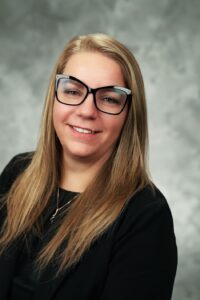
Chasity comes to us from Southern Utah with a strong background in psychology, counseling, and medical simulation leadership. She’s a Ph.D. candidate at Grand Canyon University, researching communication and belonging in higher education, and previously served as Associate Director of Simulation at Rocky Vista University—earning national awards as a Champion and Pioneer in Medical Simulation. A former barbeque pit boss, a career she aged out of, she found medical simulation more stimulating.
Outside of work, she’s a mom, grandma, weightlifter, traveler, a loyal 49ers fan, and an avid canyoner.
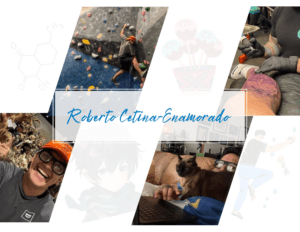
Roberto Cetina-Enamorado, MHA, BA
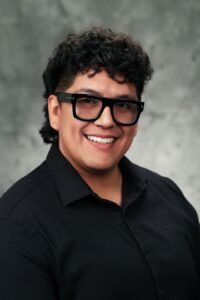
Roberto joined Roseman University College of Medicine in 2025 as a Simulation Technician. In this role, he supports clinical education by developing, coordinating, and running high-fidelity medical simulations, while also overseeing the simulation center’s standardized patient program. His work helps create realistic, immersive training environments that strengthen students’ critical thinking, teamwork, and clinical decision-making skills. Though Gordon Ramsay once asked him to help run a Las Vegas restaurant, Roberto chose instead to dedicate his talents to preparing the next generation of physicians.
Amy Chow, BS, CHSOS
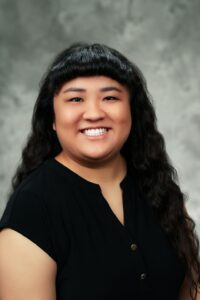
Amy is a Simulation Technician at Roseman University College of Medicine, where she supports simulation-based education through her technical expertise and hands-on assistance in running high-fidelity medical simulations. She ensures that students and faculty have the resources they need for realistic, immersive training experiences.
Outside of simulation, Ms. Chow’s talents stretch far beyond the classroom. As a Hawaii native, she taught some of the top surfers of the last decade everything they know, and she credits her extensive karate skills to her legendary mentor, Mr. Miyagi.
Valearia Clark, BA
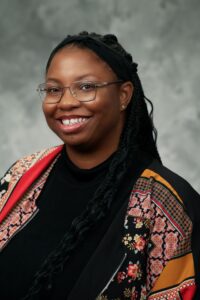
Valearia serves as the Coordinator for the Medical Simulation Center at Roseman University College of Medicine. She joined the College in July 2023, bringing more than 15 years of experience in academia and the health sciences. In her role, she ensures the smooth operation of the center, supporting faculty, students, and staff in creating effective, immersive learning experiences.
When she isn’t advancing medical education, Valearia devotes her time and energy to the rescue and care of tigers and llamas—a passion that reflects her dedication to both compassion and community.
What we do in the shadows…
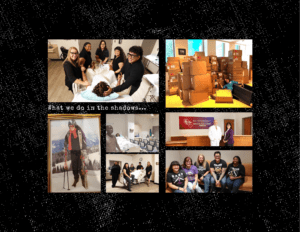
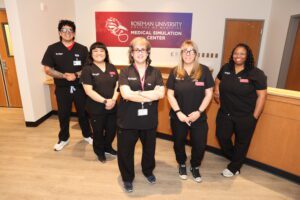 We’re the crew that keeps the Simulation Center humming—setting up scenarios, fixing what breaks, and making sure learners have what they need. And when we’re not in action? You’ll probably catch us causing our usual chaos, both in and beyond the “dungeon” (aka the basement).
Sim Crew After Hours…



Task Trainers
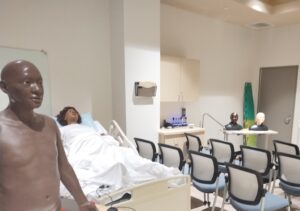 The Simulation Center offers a variety of task trainers that let students practice key clinical skills—such as IV insertion, injections, suturing, and airway management—in a safe, hands-on learning environment. These trainers help students build confidence and improve technique before working with real patients.
🩺 Physical Examination Trainers |
💉 Procedural Trainers
🌬️ Airway Management Trainers |
🧍♂️ Pelvic and Rectal Trainers
🚻 Catheterization Trainers
👶 Obstetric and Pediatric Trainers
|
Simulation Manikins
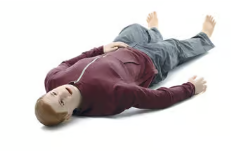
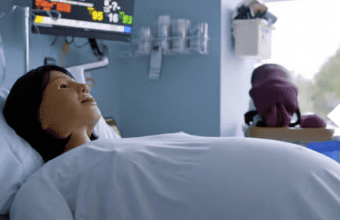
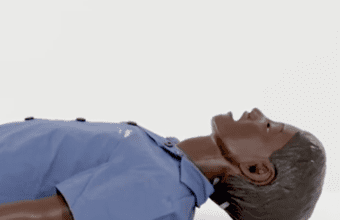
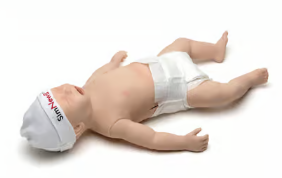
Simulation manikins — also called patient simulators — are lifelike models that help students practice real-world medical situations in a safe environment. They can breathe, have a pulse, and display vital signs just like real patients. Instructors can program them to experience different medical conditions, such as a heart attack or stroke, allowing students to learn how to recognize and respond appropriately. Some of the advanced manikins can even talk and respond, making the training experience feel as close to real life as possible.
Standardized Patient Program
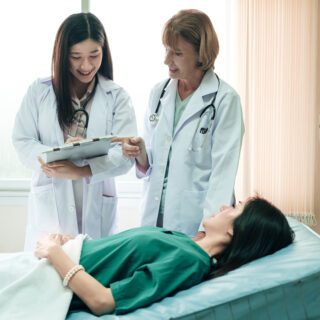
The Simulation Center hosts Standardized Patient days, where students have the opportunity to apply their clinical skills in realistic scenarios designed by our clinical faculty. These sessions feature trained actors portraying patients, allowing students to grow into clinically excellent, community-focused, socially accountable, humble, compassionate, and inclusive physicians committed to reducing health disparities across Nevada.
For more information and to apply as an SP, click the link below.
Student Resources
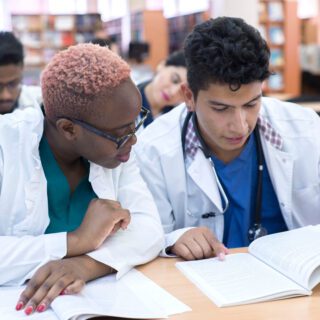
The Simulation Center provides students with valuable opportunities to enhance their clinical skills outside of scheduled classes. Through the Canvas Dashboard, students can sign up to complete their Resuscitation Quality Improvement (RQI) training—an innovative program from the American Heart Association that helps healthcare providers acquire and maintain high-quality CPR skills.
In addition to RQI training, students may coordinate with their clinical sciences faculty to schedule dedicated time in the Simulation Center. This allows learners to practice with simulation equipment and task trainers, developing their hands-on clinical abilities in a supportive, self-directed environment.
To reserve time with a specific piece of simulation equipment, please reach out directly to one of your clinical sciences faculty members.